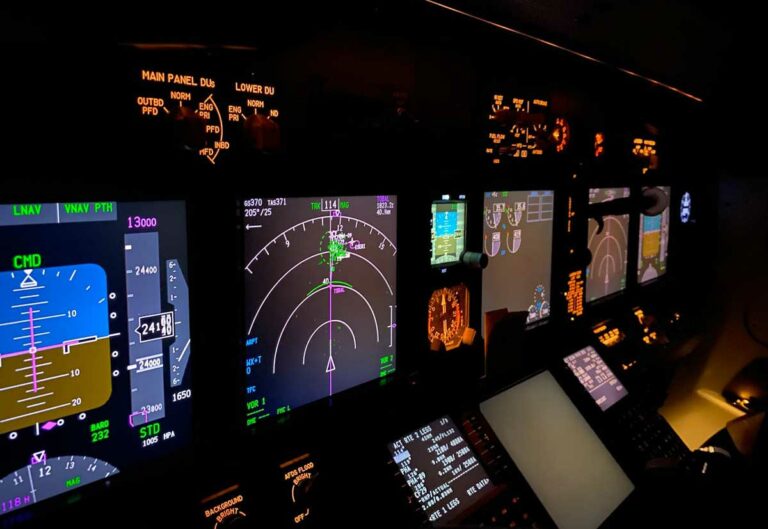
The Aircraft That Calls for Maintenance Before It Breaks
For over a century, aircraft maintenance has largely followed a predictable pattern.
An aircraft flies, a defect occurs, the fault is diagnosed.
Maintenance engineers rectify the problem.
The aircraft returns to service.
Today, however, the aviation industry is witnessing a profound transformation. Aircraft are increasingly capable of identifying abnormalities, predicting component failures, transmitting real-time health data to the ground, and recommending maintenance actions before a defect becomes operationally disruptive.
This shift is driving the rapid growth of the Aircraft Health Monitoring System (AHMS) market, which according to industry forecasts is expected to grow from approximately USD 6.3 billion in 2023 to USD 8.6 billion by 2028, representing a compound annual growth rate (CAGR) of 6.5%.
While the numbers are impressive, the implications for airlines, maintenance organizations, aircraft manufacturers, and regulators are far more significant.
The future of aviation maintenance is becoming data-driven, predictive, and increasingly intelligent.
What Exactly Is Aircraft Health Monitoring?
Aircraft Health Monitoring Systems are integrated digital platforms that continuously monitor the health and performance of aircraft systems.
Using thousands of sensors installed throughout modern aircraft, AHMS collects and analyzes data relating to:
- Engines
- Hydraulic systems
- Flight controls
- Electrical systems
- Avionics
- Environmental control systems
- Landing gear
- Structural integrity
Rather than waiting for a component to fail, AHMS identifies subtle trends that indicate deterioration long before they become operational problems.
In simple terms, Traditional maintenance asks, “What broke?”
Aircraft Health Monitoring asks, “What is likely to break next week?”
That distinction is changing the economics of aviation maintenance.
Why Airlines Are Investing Heavily
Every minute an aircraft remains grounded costs money.
For a narrow-body commercial airliner, an Aircraft on Ground (AOG) event can cost thousands of dollars per hour through:
- Flight cancellations
- Passenger disruptions
- Crew repositioning
- Spare aircraft deployment
- Compensation liabilities
Health monitoring systems reduce these risks by enabling maintenance teams to intervene before a failure occurs.
A bearing showing abnormal vibration.
An engine parameter trending outside limits.
An electrical component exhibiting unusual thermal characteristics.
These issues can now be detected days or even weeks before operational impact.
The result is:
- Higher fleet availability
- Improved reliability
- Reduced maintenance costs
- Increased passenger confidence
The MRO Revolution
Perhaps nowhere is the impact of Aircraft Health Monitoring more visible than in the Maintenance, Repair and Overhaul (MRO) sector.
The MRO segment is expected to remain the largest beneficiary of AHMS adoption during the forecast period.
Historically, maintenance organizations relied heavily upon:
- Scheduled inspections
- Pilot defect reports
- Manual troubleshooting
- Historical maintenance records
Today’s MRO facilities increasingly utilize:
- Predictive analytics
- Digital twins
- Machine learning algorithms
- Real-time aircraft health dashboards
Leading MRO organizations can now forecast component failures before aircraft arrive at maintenance facilities.
This allows:
- Advance procurement of spare parts
- Better manpower planning
- Reduced turnaround times
- Improved hangar utilization
The result is a significant increase in operational efficiency.
Why Asia-Pacific Is Becoming the Growth Engine
While North America and Europe remain mature aviation markets, the Asia-Pacific region is expected to record the fastest growth in Aircraft Health Monitoring adoption.
Several factors are driving this expansion.
Explosive Fleet Growth
Airlines across India, China, Indonesia, Vietnam and Thailand continue to expand aggressively.
India alone has more than 1,500 aircraft on order across its airline sector.
Every new-generation aircraft entering service arrives equipped with increasingly sophisticated health monitoring capabilities.
Rising Passenger Demand
Asia-Pacific is now home to the world’s fastest-growing aviation markets. India’s domestic aviation market has surpassed 150 million annual passengers and continues to grow. This growth creates pressure on airlines to maximize aircraft utilization. Health monitoring systems directly support this objective.
Regulatory Expectations
Civil aviation authorities across the region are increasingly emphasizing:
- Reliability management
- Data-driven safety oversight
- Predictive maintenance
- Operational risk reduction
Aircraft Health Monitoring aligns perfectly with these objectives.
Countries such as India and China are steadily moving toward more sophisticated maintenance oversight frameworks where data analytics plays an increasingly important role.
The Technology Leaders
The Aircraft Health Monitoring market is currently dominated by major aerospace and technology companies.
Among the leading players are Safran, Airbus, RTX (formerly Raytheon Technologies), Honeywell and Teledyne Technologies.
These organizations are investing heavily in:
- Artificial Intelligence
- Big Data Analytics
- Cloud-Based Maintenance Platforms
- Digital Twin Technologies
- Predictive Maintenance Algorithms
Their objective is clear:
Transform aircraft maintenance from a reactive function into a predictive business capability.
Real-World Examples Already Flying Today
Modern aircraft are already demonstrating the power of health monitoring.
Airbus Skywise
Airbus’s Skywise platform aggregates operational data from thousands of aircraft worldwide.
The system identifies trends, predicts failures, and helps airlines optimize maintenance planning.
GE Aerospace Predictive Analytics
GE Aerospace monitors engine health continuously across global fleets.
Its systems detect anomalies long before they become operational events.
Many airlines now receive maintenance recommendations before pilots notice any performance issue.
Rolls-Royce Engine Health Management
Rolls-Royce’s “Power by the Hour” model relies heavily on continuous engine health monitoring.
Data from engines is analyzed around the clock to maximize reliability and reduce unscheduled removals.
The Future: AI-Powered Aircraft Maintenance
The next phase of Aircraft Health Monitoring will be powered by Artificial Intelligence.
Industry experts envision aircraft capable of:
- Predicting component failures months in advance
- Automatically generating work packages
- Ordering spare parts autonomously
- Scheduling maintenance events
- Recommending corrective actions
In effect, tomorrow’s aircraft may act as active participants in their own maintenance management.
This represents one of the most significant changes in aviation since the introduction of digital flight management systems.
What It Means for India
India’s aviation ecosystem stands at a particularly important crossroads.
The country is simultaneously:
- Expanding airline fleets
- Building new airports
- Developing domestic MRO capability
- Encouraging indigenous aerospace manufacturing
Aircraft Health Monitoring will play a critical role in supporting these ambitions.
Organizations investing early in predictive maintenance technologies are likely to gain significant competitive advantages through:
- Lower maintenance costs
- Better aircraft availability
- Enhanced safety performance
- Improved customer satisfaction
For India’s emerging MRO industry, this represents a strategic opportunity to leapfrog traditional maintenance models and move directly into digitally enabled maintenance operations.
To Summarize:
The projected growth of the Aircraft Health Monitoring market to USD 8.6 billion by 2028 is not merely another aerospace statistic.
It reflects a fundamental shift in how aircraft are maintained, how airlines manage reliability, and how aviation safety is delivered.
The industry is moving away from maintenance based on failures and inspections toward maintenance driven by prediction and intelligence.
In the years ahead, the most successful airlines and MRO organizations will not necessarily be those with the largest fleets or hangars.
They will be the organizations that best harness the power of data.
Because in modern aviation, the safest aircraft may increasingly be the one that knows it has a problem before anyone else does.
The post Aircraft That Predict Own Failures, Reason Why Aircraft Health Monitoring Market is Racing To $8.6 Billion appeared first on N4M (News4masses).
from
https://news4masses.com/aircraft-predict-failures-aircraft-health-monitoring-market-8-6-billion/




No comments:
Post a Comment