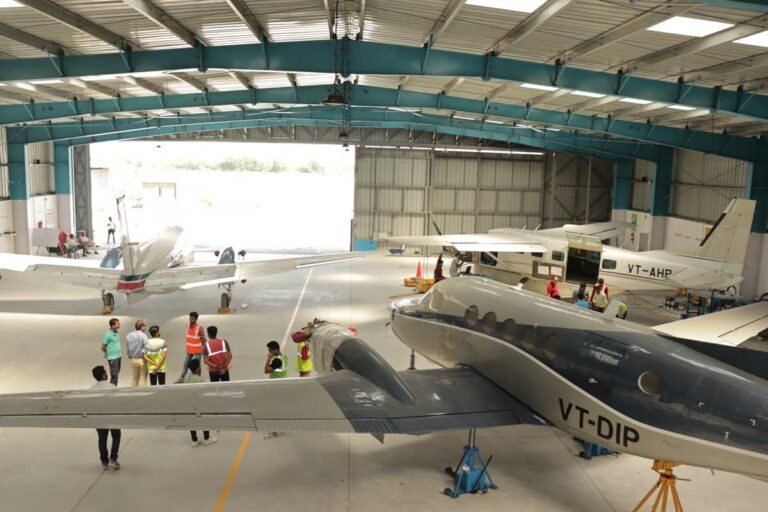
The OFAC decision removes four Indian companies from the SDN List – but for India’s aviation sector, the timing puts a renewed spotlight on one of the country’s long-standing independent third-party MRO organizations.
In its June 30, 2026 sanctions update, the US Treasury’s Office of Foreign Assets Control (OFAC) listed the following Indian entities under the specific heading: “The following deletions have been made to OFAC’s SDN List”:
- RRG Engineering Technologies Private Limited, Hyderabad, established in 2008 according to the OFAC entry.
- Lokesh Machines Limited, Hyderabad, an engineering and machine-tool company established in 1983.
- Galaxy Bearings Ltd, Ahmedabad, operating in the engineering components and bearings sector.
- Shaurya Aeronautics Private Limited, New Delhi, a DGCA-approved aircraft Maintenance, Repair and Overhaul organization.
All four had previously been listed under the Russia-related Executive Order 14024 framework.
The Treasury notification does not publicly detail the individual rationale behind each deletion. The change in status is nevertheless significant, given the implications an SDN designation can have for banking, international transactions, vendor relationships and global supply-chain access.
For India’s aviation industry, however, Shaurya Aeronautics’ removal is particularly noteworthy.
It comes at a time when the country’s Maintenance, Repair and Overhaul (MRO) sector is undergoing one of its most significant structural transformations in decades.
India’s MRO Boom Is Also a Consolidation Story
India has one of the world’s fastest-expanding aircraft fleets, enormous airline order books and a rapidly growing requirement for domestic maintenance capability.
Industry estimates place Indian MRO demand at around $4.4 billion in 2025, with the market projected to reach approximately $5.7 billion by 2030.
Yet beneath the growth story, consolidation is quietly reshaping the sector.
The acquisition of Air Works by the Adani aviation ecosystem was followed by the move, through Horizon Aero Solutions – a 50:50 venture between Adani Defence & Aerospace and Prime Aero – to acquire 100 per cent of Indamer Technics.
The capabilities of two historically prominent maintenance organizations are consequently becoming part of a much larger integrated aviation platform.
The strategic logic is compelling.
Scale brings capital, infrastructure, stronger OEM relationships and the ability to compete for large airline and international maintenance contracts. India needs such platforms if it intends to reduce its historical dependence on overseas MRO facilities.
But consolidation also raises an important question:
If Independent MROs become part of larger Aviation Ecosystems, then who will remain genuinely Independent for Operators seeking Third-party Maintenance Support?
Why Independent Third-Party MROs Still Matter?
For aircraft operators, the distinction is more than academic.
An independent MRO must compete for virtually every customer. Without the comfort of a large captive fleet feeding work into its hangars, its business depends directly upon technical capability, responsiveness, turnaround time and operator confidence.
That commercial reality creates its own discipline.
It is particularly relevant in general aviation, where business jets, turboprops, helicopters, training aircraft, charter fleets and state aviation units operate across multiple OEM platforms.
Their requirements rarely fit neatly into an airline-style maintenance model.
A general aviation operator may own one aircraft – or operate five entirely different aircraft types. For a two-aircraft company, grounding one aircraft means losing half its operating capacity.
An AOG is therefore not merely an engineering problem. It can become a business crisis overnight.
For such operators, the right third-party MRO often becomes an extension of their own engineering organization.
India has several approved maintenance organisations across different categories and capabilities. But among long-established, independent, multi-platform MROs substantially focused on the diverse general aviation environment, the field is narrowing.
It is against this backdrop that Shaurya Aeronautics Private Limited assumes renewed significance.
Shaurya Aeronautics: More Than Two Decades into Maintenance
Shaurya Aeronautics established its MRO operations in 2002 and operates as a DGCA-approved CAR-145 Maintenance Organization.
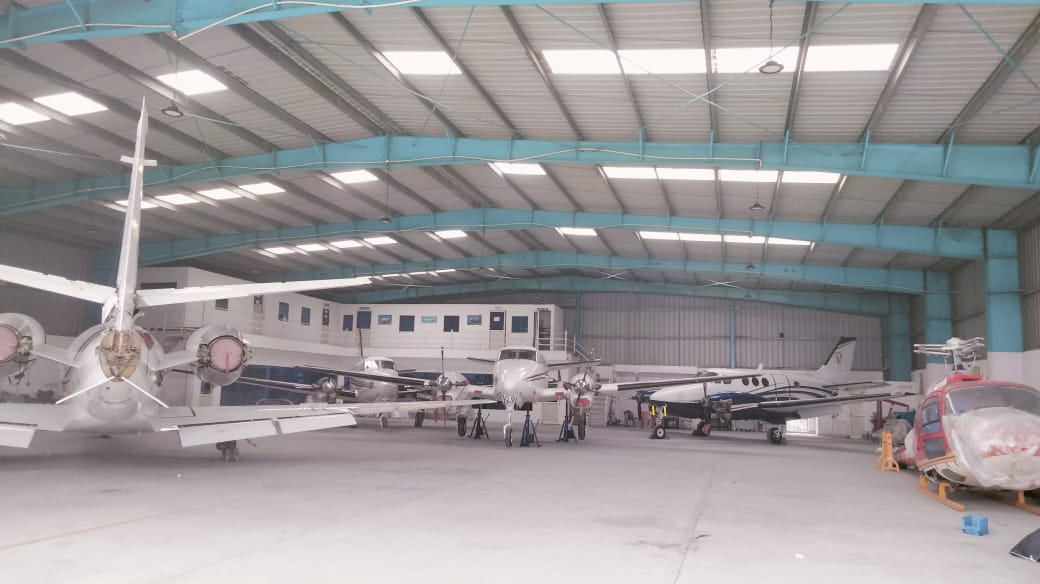
For more than two decades, it has worked relentlessly within India’s technically diverse general aviation environment.
Its maintenance infrastructure at Dr Bhimrao Ambedkar airstrip in Partapur, Meerut, provides a dedicated hangar facility alongside an airstrip – an important combination for general aviation operators seeking maintenance support in North India.
But Shaurya’s greater advantage may not simply be its infrastructure. It is institutional memory.
India’s aviation boom is attracting new investment into maintenance. New hangars, tooling and technology are welcome and urgently required.
But those who have spent decades in aircraft maintenance understand a fundamental reality:
Capital can build a Hangar. Experience builds an MRO.
Maintenance organizations accumulate knowledge slowly over time.
They learn recurring aircraft defects, understand ageing fleet behaviour, anticipate spares bottlenecks and discover how OEM support systems actually function when an aircraft is AOG at an inconvenient location.
Most importantly, experienced engineers develop something no maintenance manual can fully document. It’s the technical judgement.
You can fund infrastructure rapidly. But you cannot fast-track maintenance maturity.
Shaurya Aeronautics’ more than two decades in India’s general aviation engineering environment have allowed it to accumulate precisely this type of experience.
With Air Works and Indamer having been gulped up to become part of Adani’s larger integrated aviation platform, Shaurya now stands among a narrowing group of established independent, multi-platform MRO organizations serving India’s general aviation sector. Its independence is increasingly becoming it’s strategic advantage.
Moreover, the removal from the SDN List now helps Shaurya to further scale up it’s international commercial relationships and offer the industry an opportunity to associate with a truly independent, matured and customer focused MRO that caters to the operator’s desire to see their aircraft out of hangar, airworthy and flying again.
The post Why Shaurya Aeronautics’ Removal From US Sanctions List Matters Most to India’s MRO Industry? appeared first on N4M (News4masses).
from
https://news4masses.com/shaurya-aeronautics-us-sanctions-india-mro-industry/




No comments:
Post a Comment