Thursday, January 29, 2026

Goldmine In DPM 2025: How MSMEs Can Build for the Military And Get Paid To Do It

Indian military aircraft

For over three decades, I sat on the “other side” of the table. I’ve evaluated countless proposals, sat through endless technical presentations, and unfortunately, watched brilliant engineering ideas from Indian MSMEs die a slow death.

Why? Not because the technology was bad. But because the procurement process was designed for buying, not building. It was rigid, risk-averse, and frankly, intimidating.

But something has changed. And if you are an aerospace manufacturer, a defence startup, or a deep-tech MSME, you need to sit up and pay attention.

The Ministry of Defence has released the Defence Procurement Manual (DPM) 2025. While most people are skimming through the standard clauses, there is a hidden gem that changes the entire landscape of Revenue Procurement: Chapter 10.

Defence Procurement Manual DPM

For the first time, the Indian Armed Forces aren’t just looking for vendors; they are looking for partners. Here is why DPM 2025 is a goldmine for your business—and how you can claim your share.

1.  The ‘Suo Moto’ Revolution: Don’t Wait to be Asked

In the past, you had to wait for a Request for Proposal (RFP) or a tender. You were reactive. If we didn’t ask for it, you couldn’t sell it.

Clause 10.9 shatters that barrier. It introduces the ‘Suo Moto’ proposal.

This means you don’t have to wait for the Armed Forces to release a tender. If you have identified a part, a sub-system, or a technology that is currently being imported, you can proactively approach the Directorate of Indigenisation with a proposal to make it in India. You pitch the solution, and if it meets the requirement, the process starts. You are now the driver, not just a passenger.

2.  Cash Flow is King (And We Finally Get It)

I know the biggest killer for MSMEs is working capital. You can’t eat “potential orders.” You need cash to buy raw materials and run R&D.

DPM 2025 addresses this head-on. Under Clause 10.15.3, the government can now release up to 30% Advance Payment against a bank guarantee for development projects.

Even better? There is No Earnest Money Deposit (EMD) required for these development contracts. The system is finally acknowledging that your money should go into engineering, not locked up in bank guarantees before you’ve even started.

3.  Removal of Risk: Punishment is Out, Partnership is In

Development is messy. Prototypes fail. Timelines stretch. In the old days, if you were late, you were hit with Liquidated Damages (LD)—penalties that could wipe out your profit margin. It made R&D too risky for smaller players.

Chapter 10 changes the rules. Clause 10.18.1 explicitly allows for the waiver of Liquidated Damages during the development phase. The MoD understands that R&D has inherent uncertainties. We are no longer here to punish you for the “trial” in “trial and error.”

4.  Guaranteed ROI: The 5-Year Promise

The nightmare scenario for any vendor is this: You spend two years developing a product, you prove it works, and then… the government issues a new open tender, and someone else undercuts you by ₹10.

That fear ends now. Clause 10.18.1 provides for an Initial Order Quantity (IOQ) to be placed immediately upon successful development. More importantly, it allows for Long Term Procurement from the successful developer for up to 5 years without re-tendering.

This is your Return on Investment. If you build it and it works, you are the supplier. Period.

The Bottom Line

The government has laid out the red carpet. The policy (DPM 2025) is revolutionary, the intent (Atmanirbhar Bharat) is clear, and the funding is available.

However, let me offer a word of caution. While the policy is new, the process—the Statement of Case, the commercial bid structure, the Intellectual Property Rights (IPR) negotiations—remains complex. A brilliant product can still be rejected if the proposal doesn’t speak the language of the Armed Forces HQ or fails to map the Operational Requirement (OR) correctly.

This is where the gap lies

You have the engineering capability. We the veterans have the operational insight.

Navigating this manual requires someone who understands both the cockpit and the conference room. A seasoned veteran who has managed these requirements from the inside, can help you translate your technical prowess into a winning, compliant Defence proposal.

Chapter 10 is the opportunity you’ve been waiting for. Don’t let it get lost in the paperwork. Let’s build something together.

The post Goldmine In DPM 2025: How MSMEs Can Build for the Military And Get Paid To Do It appeared first on N4M (News4masses).


from
https://news4masses.com/goldmine-dpm-2025-msmes-build-for-military/

Sunday, January 25, 2026

Gen Z: Russian Cinema for Zoomers in India

Film producers

On January 29th, at the Twelfth Kolkata International Children’s Film Festival, ROSKINO, supported by the Ministry of Culture of the Russian Federation, will present five Russian films as part of the Russian Film Days India 2026.

Kolkata International Children’s Film Festival presents fiction, animated, documentary and educational films from all over the world to wide children and teenagers’ audience to broaden the horizon for young viewers. This year, the festival will be held for 12th time across eight venues throughout the city of Kolkata.

Russian Film Days, India

The Russian film program at the festival:

  • The Big Trip 3: Race Around the World (2024, directed by Vasily Rovensky)—the family-audience franchise continued. After his two big adventures, Mick-Mick the Bear dreams of having calm and predictable life surrounded by his family and bees. But his dream is hopeless. The long-awaited new addition to the family presents a new problem: the silly stork brings the wrong baby… again! To fix this, Mick-Mick launches on a new journey. But this time it’s not going to be that easy.
  • Detective Chirp & the Golden Beehive (2022, directed by Grigory Vozhakin) is an animated story that won the next generation’s hearts both in Russia and abroad. The residents of the Honey Valley are preparing for their favorite holiday: the Town Day, when a unique artefact is displayed for everyone to see: the Golden Beehive. The legend has it that it was discovered by the founders of the Honey Valley, and it is said that the town will be showered by thousands of misfortunes if the hive disappears. Right before the holiday, the hive is stolen. And the main suspect is Chirp the Squirrel, Detective Sofi’s assistant. Chirp and his friends are now to unravel the case, find the true thief, and return the Golden Beehive, restoring peace in the Valley.
  • The Dino Family (2025, directed by Maxim Volkov) is yet another successful show beloved by foreign guests of Russian film festivals. Schoolboy Phil Dino’s life is spiraling downward: his classmates laugh at him, girls don’t notice him, while his father embarrasses him with the family heritage: a paleontology museum forgotten by everyone. But it all flips around when Phil accidentally activates a portal to the Mesozoic. Now, he’s in for a dino challenge in the jungles in the company of a chatty velociraptor, his helicopter father, and the girl he likes at school. It seems that the time has come for Phil to realize that belonging to the Dino family is not so bad.
  • Don’t Mess with Baba Yaga (2025, directed by Alexander Voytinsky) is a kind and magical comedy starring Svetlana Khondchenkova. When ten-year-old Petya gets a new nanny—strange, grumpy, yet incredibly charming—he’s fast to grasp that she’s not like everyone else. She became a nanny to go undercover, while she is actually Baba Yaga, the legendary magician who lost her mortar and hid among people. Now, it’s up for Petya alone to help her to get her magic powers back. In return, she teaches the boy to fly. Not just in her mortal—in his everyday life, too.
  • Finnick 2 (2025, directed by Denis Chernov) the continued story about the charming house boogie Finnick and his friends’ adventures. It’s been a year since Finnick and Christina successfully prevented a threat to the city. An absurd accident makes Finnick lose invisibility, which puts the whole house boogie kind’s existence in jeopardy. Besides, a dangerous hunter named Eugene is now after Finnick himself. The friends are to go on an incredible journey to find a magical staff that can help them fix everything.

It has become an annual tradition for ROSKINO, with support from the Ministry of Culture of the Russian Federation, to conduct two-way events—big-scale Russian Film Festivals in India and Indian Film Festivals in Russia—and organize Russian film screenings and Russia’s regular participation at Indian festivals.

For example, on December 5th to 7th, New Delhi witnessed
the big-scale Russian Film Festival, dedicated to the President of the Russian Federation Vladimir Putin’s visit to India, with its full houses of viewers who came to watch outstanding modern films, Q&A sessions with filmmakers and stars, and a business program.

Moreover, in December 2025, the Indian capital hosted the screening of films that participated in the Diamond Butterfly Open Eurasian Film Award organized by the Russian Culture Fund with support the Ministry of Culture of Russia and participation of ROSKINO.

The post Gen Z: Russian Cinema for Zoomers in India appeared first on N4M (News4masses).


from
https://news4masses.com/gen-z-russian-cinema-zoomers-india/

Thursday, January 15, 2026

India’s Reverse Cha-Cha-Cha

Indian Economy on downhill

India’s foreign policy continues to do Cha-Cha-Cha in reverse gear – one step forward, two steps back. There is much emphasis on learning from the past, but we forgot Chanakya’s mantra of Saam, Daam, Dand, Bhed, wherein Gadhey Ko Mama Bolna Chahiye (call the donkey “Uncle”)) when needed, be it Tom, Jerry or Donald Trump. Before Prime Minister Narendra Modi went to the US to attend the Quad Summit chaired by then POTUS Joe Biden, Trump announced “friend” Modi will come to see him. But Modi avoided him, which ignited Trump’s tail. Then came the missing call to Donkey Uncle.

Pakistan “bought” Trump despite India being the fourth largest global economy, even though our debt repayment is becoming difficult with 40%+ taxpayers’ money going into repayments.

Social media is awash with India cocking a snook at Trump’s 500+ tariffs threat because we are signing FTA with multiple countries. Then why has India’s import of Russian crude dropped 29% month-to-month, recording lowest ever in December 2025? Now the Reliance Group is to buy oil from Venezuela in USD, eating further into our reserves and Railway Minister Ashwini Vaishnav attended a rare mineral meeting in the US. American weapons and weapon platforms continue to be imported despite proven unreliability of the US. A billion-dollar plus deal for F-404 engines is only for 80% technology transfer, not 100%. In Trump’s first presidency, we gave up on cheaper and next-door Iranian oil and now we are scared to take the Russian offer of Su-57 with full technology transfer under Make in India – going for more expensive Rafales (bigger kickbacks)? A tweet by Dr. Brahma Chellaney, says..

An Indo-American view is that India lost Trump to Pakistan not only because  Modi not telephoning Trump, and Trump’s idiocies, but also because: one, Vinay Kwatra was posted as India’s ambassador to the US despite his dismal performance in Bangladesh; two, tackling the Donald Trump Administration was left to EAM S Jaishankar and his son Dhruva Jaishankar who is influencing India’s foreign policy.

India’s appeasement of the US is in the backdrop of Indian politicians settling their children in the west. Dr. Jaishankar’s son Dhruva and daughter Medha are US citizens living in the US. NSA Ajit Doval’s son Vivek is a British citizen, living in Singapore, and director of the ‘GNY Asia Fund’; registered 13 days after Modi announced demonetisation in November 2016. There are allegations of potential conflicts of interest and links to increased FDI from Cayman Islands after demonetisation. Of Piyush Goel’s two children, one is settled in Washington DC. These are only few examples.

US ambassador to India Sergio Gor posted on X: “A quick update: @SecRubio Just concluded a positive call with @DrSJaishankar.  They discussed next steps regarding our bilateral trade negotiations, critical minerals and a possible meeting next month.” So, we are looking for a critical mineral deal with the US (like Pakistan) while importing REEs from China! Fearing Trump, no defence deal was announced during the recent 23rd India-Russia Annual Summit at New Delhi. Expect the same meek approach (submitting to trade in Dollars) when India chairs the 2026 BRICS Summit: with Jaishankar already announcing focus on ‘humanity-first’ strategy to promote global welfare.  What humanity first when India lacks guts to condemn severe human right violations against women by Taliban and genocide in Gaza with 71,000+ Palestinians killed and attacks continuing?

Europe, with its Nazi-cum-neo-Nazi culture, will continue to be part of Washington’s kennel club. Witness German Chancellor Friedrich Merz raised the issue of India importing Russian oil during his recent trip to India. With total focus on trade, FTA’s are sought sans “any other” consideration.  After economic offender Lalit Modi jeered India, the MEA says “will bring back all fugitives” by 2047? Several economic fugitives have origins/companies in Gujarat, and many like Nirav Modi and Vijay Mallya, are in the UK. So why didn’t we link their extradition with the FTA when India and the UK have an Extradition Treaty effective since 1993? Is this deliberate act being deflected by the election stunt of getting back the Kohinoor?

India’s backflip from a feigned stand against China, to prostrating is even more amusing. Gone is India’s demand for return to the 2020 pre-April territorial status and troop deployment by both sides in Eastern Ladakh. Shaksgam Valley is in the spotlight presently, but PLA deployments in Shaksgam and improving infrastructure has been ongoing for years. A new Chinese road entering Shaksgam through Aghil Pass, and a Pakistani road connecting Muzaffarabad to Mustagh Pass on the border with Shaksgam, and linking beyond to Yarkand in China was  in the works. China plans to open a front for Siachen from the North through Shaksgam and through Turkistan La.  Now China has unambiguously claimed that Shaksgam Valley is Chinese territory, coinciding with a vice minister–led Chinese delegation visiting BJP headquarters in New Delhi. Chinese help to Pakistan during Operation ‘Sindoor’, which resulted in multiple IAF aircraft losses on day one are forgotten! Reports of India planning to remove all restrictions on Chinese investments and businesses would obviously be implemented soon.

 Army Chief General Upendra Dwivedi rubbishing Chinese claim to Shaksgam has no meaning, when Jaishankar and Doval lack guts to say this face-to-face to China’s Foreign Minister Wang Yi and other Chinese officials.  Presently, 100-120 Pakistani terrorists are poised to  infiltrate into India. There eight active terror camps in Pakistan; six across the LoC and two across the IB. Why are we not at least hitting the launch pads and terrorist camps across the LoC? Are we afraid of Pakistani response? Does the Army still have the so-called free hand? Should we borrow political will from Israel?

Covering up the government’s pusillanimity is amusing. One Sheikh Chilli claims India got back 1,000 sq km territory from China.

Another post says Indian Army has regained patrolling rights to 982 sq km in Depsang (Eastern Ladakh)  of territory lost to China in 1962, and gained access to 56 sq km in Demchok.  Question in social media is should Jaishankar/Doval or both be given Padma Award for this?

The fact is India was patrolling these areas before China redrew the LAC in Eastern Ladakh in 2020: we then lost control of 26 out of 65 Patrolling Points (PPs). After two years plus of denying access to Indian patrols, the  2024 India-China Border Patrol Agreement was signed; restoring patrolling rights in Depsang (not entire Eastern Ladakh). This agreement underscored territorial claims of both countries, this too with following caveats: Indian patrols to be on foot or horseback, not vehicle-borne; both sides to info each other through hotline at least 24 hrs prior to the patrol; one PP can be visited in a month by both sides. So, no area has been retrieved, which we lost in 2020 and China continues to call the shots; allowing access to our patrols with conditions. PLA continues to consolidate in their new locations. China was constructing a border village in Demchok bang on the LAC, which must be competed now. There is no change in the areas of Galwan, Hot Spring and Pangong Tso. On the north bank of Pangong Tso, India is left with one solitary post between Fingers 2 and 3, but we cannot patrol eastwards as before, while PLA has positioned tanks at Finger 10 and the metalled road linking it to Finger 3 is intact.   

Who the prime minister’s advisors are is ambiguous. Modi wrote to the UAE to lift the ban on the movie ‘Dhurandhar’ although the movie is banned in Bahrain, Kuwait, Oman, Qatar, the UAE and Pakistan. This indicates the limited influence India has, while we boast of leading the Global South. As if on a cue, Gen Dwivedi visited a Hindu temple during an official visit to the UAE, although he avoided visiting the Pashupatinath Temple when he went to Nepal.    

Can we shut the door to the US, withdraw from Quad, saying we will reconsider when America behaves and its reliability is established? Apparently no, even though some European countries are reconsidering their ties with the US. We should have occupied Karakoram Pass when China invaded Eastern Ladakh in 2020, but instead, we meekly vacated the Kailash range in our own territory. How long will India be unable to stand up to China and the US; although spin doctors will depict Trump and Xi kowtowing to Modi. With India opening the floodgates for China (ignoring all aspects of security), there is a view that India should immediately convene a RIC meeting at New Delhi, sending a strong signal to Trump. But Trump could then cancel the US citizenship of children of Jaishankar, Doval, Goyal and other Indian politicians, and boot them out, since he plans to cancel the citizenship of even naturalized US citizens.

A “smart” strategy would have been treating the Chinese delegation at BJP headquarters to gau mutra (cow urine), making them join Shri Mahakal Mahotsav/Magh Mela 2026@Prayagraj, and bathe in the holy waters. This could have made China shut its evil eye on Arunachal, return Aksai Chin and Shaksgam to us, and even plan on vacating Tibet.

The author is an Indian army veteran. Views expressed are personal.

The post India’s Reverse Cha-Cha-Cha appeared first on N4M (News4masses).


from
https://news4masses.com/indias-reverse-cha-cha-cha/

Wednesday, January 14, 2026

Continuing Airworthiness Management Organisation (CAMO): The Heart-and-Soul of Airline Safety & Efficiency

Scheduled Airline & NSOP CAMO

In the complex ecosystem of airline operations, safety, reliability and cost‐control hinge on far more than just the flight crew or the visible engineering teams on the tarmac. At the core of this is the CAMO – the organisation responsible for continuing airworthiness of the fleet. Whether a scheduled airline or a non-scheduled operator (NSOP), a robust CAMO is vital. It is the heart and soul of the airline’s aircraft availability, regulatory compliance, asset integrity and ultimately the success or failure of the operation.

This article examines why CAMO matters so much, how oversight failures can lead to catastrophic consequences, how best-in-class CAMOs deliver value and finally provides a proposed ranking structure for CAMOs in India (scheduled vs non-scheduled vs FTO) to help benchmark performance and best practices within the aviation industry.

What CAMO Actually Does

At its most basic, CAMO stands for Continuing Airworthiness Management Organisation. Its core functions include:

  • Developing and implementing the maintenance programme for each aircraft, aligned to the aircraft type certificate-holder requirements and regulator (e.g., Directorate General of Civil Aviation India (DGCA), European Union Aviation Safety Agency (EASA)).
  • Monitoring fleet reliability, analysing defect trends, and ensuring corrective action is taken (especially for recurrent faults).
  • Ensuring all airworthiness directives (ADs), service bulletins (SBs), modifications, maintenance data are incorporated and complied with.
  • Overseeing the maintenance providers (Part 145 organisations), subcontractors, ensuring the aircraft configuration control, and ensuring the continuation of airworthiness certificates.
  • Ensuring that records, documentation, traceability, safety management system (SMS) practices are in place.

In short: CAMO ensures that an aircraft remains airworthy for each flight, over its lifetime, and that the airline meets its regulatory obligations. Without a strong CAMO, an airline is metaphorically flying blind.

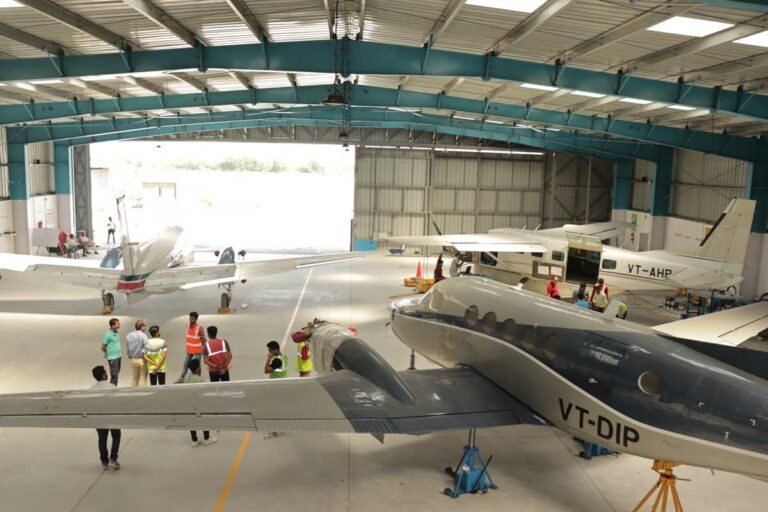
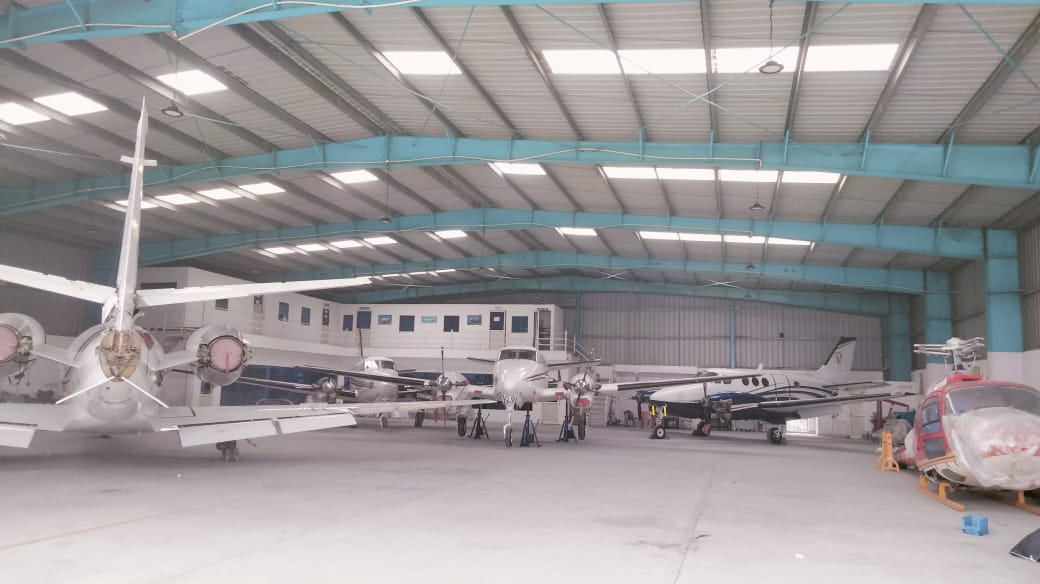
Aircraft under maintenance in Hangar
Aircraft Under Maintenance In Hangar (Image credits: Adobe)

Why CAMO Is So Critical for Airlines

  1. Safety & Risk Mitigation
    A small oversight by CAMO – missed AD, unmonitored recurring fault, improper configuration control – can cascade into a major in-flight incident. As the adage goes: “the aircraft is safe only as long as the airworthiness chain is unbroken.” For example, recurrent faults that are not addressed properly by the CAMO’s defect control system can undermine the entire maintenance programme.
  2. Operational Reliability & Asset Utilisation
    Airlines depend on high aircraft utilisation. CAMO contributes by optimising scheduled checks, ensuring minimal AOG (Aircraft on Ground) events, proper planning of maintenance slots, predictive analytics for wear and tear. As research shows, forecasting models in maintenance help avoid downtime and part shortages.
  3. Regulatory Compliance
    In India, for example, the DGCA found 263 safety-related lapses at Indian carriers in one annual audit. Some of these lapses trace back to ineffective airworthiness oversight, in which the CAMO function plays a central role.
  4. Cost Control
    Proper CAMO practices reduce unscheduled maintenance, avoid regulatory fines, reduce component wear, optimise labour and parts. A strong CAMO is a major contributor to the airline’s bottom line – especially in an environment of intense cost pressure.
  5. Brand & Reputation
    A serious airworthiness incident reflects poorly on the operator’s brand, has insurance and regulatory consequences, and can cause major long-term damage. The CAMO is the first line of defence.

Where Oversight Failures Have Cost Big Time

Here are a few cases that underline the stakes for CAMO.

  • Alaska Airlines Flight 261 (2000): A loss of control due to improper lubrication and failed maintenance of the jackscrew assembly. The oversight of the maintenance programme and follow-up by airworthiness management was lacking.
  • Chalk’s Ocean Airways Flight 101 (2005): Structural failure due to undetected fatigue cracks which persisted because the airline’s maintenance programme failed to address long-term structural problems. The CAMO oversight of ageing aircraft was weak.
  • Recurring Fault Oversight: The article “The Importance of Addressing Recurrent Aircraft Defects” emphasises that CAMO must monitor, analyse and investigate recurrent faults-failure to do so jeopardises safety.
  • Indian Airlines Safety Audit (2025): The DGCA audit found widespread lapses at Indian carriers; many of these relate to airworthiness oversight, documentation and compliance areas under CAMO purview.

These examples show that when CAMO fails to deliver, consequences can be catastrophic loss of life, regulatory action, financial ruin.

When Vigilant CAMO Saved Lives & Cash

On the flip side, many airlines credit their high-performing CAMO functions with averting major incidents, reducing cost and ensuring aircraft availability. While detailed public case studies are fewer (due to confidentiality), the following generic observations illustrate the point:

  • A CAMO that instituted real-time defect trending discovered a pattern of hydraulic pump failures on one fleet type. By acting early, modifying the maintenance schedule and monitoring spares supply proactively, it avoided multiple AOGs, each of which would have cost the airline hundreds of thousands of dollars per day.
  • An airline CAMO that implemented a digital documentation system (ensuring no missed ADs or SBs) recorded zero AD-related non-compliances over two years versus industry-average rates of 1-2 %. That translated into regulatory compliance, lower insurance premiums, and improved reliability.
  • A CAMO with strong configuration control identified mismatched part serial numbers on a component during an airworthiness review; the part was grounded before entry into service in India, preventing a potential in-flight failure scenario.

These successes highlight that CAMO, when structured, resourced and empowered properly, becomes a centre of value creation not merely cost.

Key Enablers of a High-Performing CAMO

To implement a world-class CAMO, airlines (and non-schedule operators) should focus on:

  • Clear organisational structure & governance: Including a Nominated Post Holder – Continuing Airworthiness (NPCA) with direct line to senior management.
  • Robust maintenance programmes: Aligned with manufacturer and regulator requirements, reviewed periodically.
  • Reliability and defect management systems: Analytics on rejection rates, trend monitoring, root-cause investigation.
  • Data & digital systems: For configuration control, documentation, AD/SB tracking, digital logs.
  • Linkage with operations and engineering: CAMO must not be siloed; it needs operational awareness of utilisation, defects, mission profiles.
  • Competence & training: Personnel with regulatory, engineering, maintenance knowledge; continuous training in human factors, SMS.
  • Proactive audit & review: Internal and external audits, self-assessment, performance indicators (e.g., AOG rate, AD compliance, off-wing defects).
  • Change management & culture: Encouraging reporting, transparency, learning from near misses.

As one industry-paper emphasised: “We are not getting value out of our airworthiness reviews” unless the CAMO function is well-resourced and empowered.

Ranking Structure for CAMOs: India Context

To encourage benchmarking and drive continuous improvement, the following proposed ranking structure for CAMOs in India may be adopted. These are illustrative and subjective; actual performance must be measured via KPIs.

Scheduled Airline CAMOs

Rank Tier Characteristics / KPIs
Tier 1 Best in class Zero major findings in audits, high aircraft availability (>95 %), AD/SB compliance 100%, strong reliability trend performance
Tier 2 Good Some minor findings, aircraft availability 90-95 %, minor AD non-compliance corrected promptly
Tier 3 Developing Frequent audit findings, high unscheduled maintenance, availability <90%

Non-Scheduled Airline (NSOP) CAMOs

Rank Tier Characteristics / KPIs
Tier A Excellent Strong engineering/airworthiness infrastructure, proven reliability, minimal regulatory findings
Tier B Adequate Some deficiencies, manageable reliability performance, moderate oversight
Tier C Basic / High Risk Frequent issues, reactive maintenance model, poor documentation/tracking

Flight Training Organisation (FTO) CAMOs

FTO CAMOs face unique challenges (diverse fleet types, high utilisation, trainees). Ranking could be:

  • Premier FTO CAMO: Certified mint performance, very low airworthiness issues, effective maintenance planning.
  • Standard FTO CAMO: Acceptable record, some findings but managed.
  • Emerging FTO CAMO: Needs support, multiple maintenance or oversight gaps.

*Note: Specific airline names omitted to avoid unfair ranking without full data.

Future Outlook & Imperatives

  • Digital Transformation: CAMOs must harness analytics, predictive maintenance, IoT sensors to shift from reactive to proactive. The research confirms that tailored maintenance strategies deliver ~13% cost savings over generic approaches.
  • Global Benchmarking: Indian CAMOs should benchmark against global best practices (EASA, FAA) and leverage standardised processes.
  • Regulatory Emphasis: With audits uncovering hundreds of lapses, regulators will focus more on CAMO performance airlines must be ready.
  • Talent & Culture: As fleets grow and technology becomes more complex (eVTOL, hybrid models), CAMO staff must evolve – not only technically but culturally toward continuous improvement.
  • Integration with Operations: The CAMO must not be a standalone function – it must be fully integrated with demand planning, operations, engineering and safety management.

To Summarize

For any airline – scheduled or non-scheduled, the continuing airworthiness management organisation is not a peripheral function; it is central to everything. It is the heartbeat that ensures the fleet flies, meets regulatory standards, performs reliably and costs are contained. The examples of oversight failures prove how quickly things can go wrong. Equally, the success stories show how CAMO can save lives, money and reputation.

If you are an airline executive, maintenance director or part of the airworthiness team, the message is clear: invest in, empower, and prioritise your CAMO. Because when your CAMO is strong, your airline structure becomes resilient, efficient and future-ready. Treat your CAMO not as a cost centre, but as a strategic enabler and you elevate safety, performance and profitability.

The post Continuing Airworthiness Management Organisation (CAMO): The Heart-and-Soul of Airline Safety & Efficiency appeared first on N4M (News4masses).


from
https://news4masses.com/camo-continuing-airworthiness-management-organisation-airline-safety-efficiency/

Friday, January 9, 2026

Quarter Century of Tejas, India’s Light Combat Aircraft (LCA)

India's Tejas

Inaugurating the two-day national seminar ‘Aeronautics 2047’ organised by the Aeronautical Development Agency (ADA), commenced at Centre for Airborne Systems (CABS), Bengaluru on January 04, 2026, Chief of the Air Staff Air Marshal AP Singh said meeting commitment schedules was critical at a time when the operational environment was rapidly evolving and requirements of the Indian Air Force (IAF) were growing, even as he congratulated ADA on the completion of 25 years of Light Combat Aircraft (LCA) Tejas. ‘Aeronautics 2047’ was also to trace the journey of LCA Tejas from early design sketches to operational squadrons, The LCA Mk-1A, an advanced variant of Tejas, is expected to serve as a key platform for meeting the IAFs operational requirements.

The LCA MK-2 and the naval variant are currently under development. Secretary, Department of Defence Research and Development, and Chairman of the Defence Research and Development Organisation (DRDO), Dr Samir V Kamat stressed the importance of developing indigenous technology to reduce dependence on imports. This, he said, was central to achieving the vision of Viksit Bharat.

The IAF has been facing a severe shortage of fighter squadrons – now just about equalling the Pakistan Air Force (PAF). This is not the first time the Chief of Air Staff Air Chief Marshal ACM AP Singh has publicly raised the issue of slippage in the delivery schedule of LCA Tejas. Amid these continuing serious concerns of the IAF regarding fighter squadron shortages and delays in LCA Tejas deliveries, which has a direct bearing on national security, Dr Samir Kamat  has now assured that even as HAL Tejas LCA Mk-1A is in the early stages of induction into the IAF, both the fifth-generation Advanced Medium Combat Aircraft (AMCA) and LCA Tejas Mark-II are on schedule.

Speaking on the sidelines of an event to mark the 25 years of the LCA Tejas flight programme, Kamat said, “LCA has been a marvellous journey. Now this aircraft is inducted. Now our focus is on the Mark-II variant of LCA and AMCA. Both these programs are now on schedule, and we hope to deliver our commitment to the Indian Air Force.” The first flight of Mark-II, according to him, is expected to happen in June-July 2026, and AMCA is likely to be rolled out by the end of 2028. The first flight of the aircraft may happen by early 2029. He said AMCA, being a fifth-generation aircraft, will have several new technologies. “It’s a stealth aircraft, so several new technologies will come in with AMCA,” he was quoted as saying.

According to Kamat, the decision to target the June–July 2026 window for the first flight of Tejas Mk II is based on rigorous internal assessments regarding design finalisation, subsystem integration, and pre-flight clearances. If this schedule is met, it will mark a pivotal moment for Indian military aviation. The LCA Mk2 is not merely an upgrade but a substantial evolution over the existing Tejas Mk1/Mk1A variants. Often referred to as a Medium Weight Fighter (MWF), the Mk2 is designed with a Maximum Take-Off Weight (MTOW) of 17.5 tonnes, significantly heavier than the 13.5-ton Mk1A. It will be powered by the robust General Electric F414-INS6 engine, generating 98 kN of thrust, and will feature close-coupled canards for improved manoeuvrability. This platform is envisioned as the bridge to India’s future fifth-generation fighter programmes, such as the AMCA.

It is no secret that the major reason for delay in the Tejas program is the inordinate delivery of aeroengines by GE. It would be naïve to believe that this was due to reasons beyond the control of GE. For months our media has been talking of GE transferring 100% technology of the F-404 engine to India; which obviously was fake propaganda.  The latest now is that GE and Hindustan Aeronautics Limited (HAL) is expected to finalize the F414 Engine technology transfer deal by March 2026, and the first indigenous unit targeted by 2029. According to sources close to the development, negotiations for the prospective USD 1.5 billion contract have been concluded, establishing a framework for an unprecedented 80% Transfer of Technology (ToT). Once approved by both governments, a process anticipated to complete within the first quarter of 2026, HAL is to  commence the phased absorption of critical manufacturing technologies; with the goal to establish a comprehensive domestic ecosystem for building, servicing, and sustaining these advanced propulsion systems.

The Cabinet Committee for Security (CCS) had approved the Tejas Mk2 program in September 2022, allocating nearly INR 10,000 crore for its development. However, this approval included a crucial condition. Prototype development would begin only after India achieved clarity on the jet engine partnership with the United States. Compare this with the ToT for the aeroengine yet to be signed – hopefully by March 2026. But the ToT is only for 80%, which implies the control will remain with the US. This does not inspire much confidence, with the delays in   delivery of F-404 previously signed and agreed to by GE (only five received?), as well as the inordinate delay in delivering Apache helicopters. While the negotiating team has reportedly committed USD 1.5 billion in the deal but with only 80% ToT the control will remain with the US; a country which is highly unreliable and can switch off anytime – the indirect Kill Switch.

Witness Donald Trump now lying that Prime Minister Narendra Modi asked “may I see you please” and then requested him for 68 Apache helicopters, which would be delivered on time. Trump has now threatened Inda with 500% tariffs for buying Russian oil. There is every reason to believe that the Trump Administration behind the Tejas jet crash at the Dubai Air Show in which the pilot Wing Commander Namansh Syal was killed. Trump’s attack on Venezuela, bombing of Caracas without declaration of war, abducting President Maduro and his wife Cilia Flores who was apparently tortured as is visible in this tweeted picture of hers, indicates Trump is Satan incarnate.

Screen grab of Cilia Flores vide tweet by @yasiragha1234 dtd 07 Jan 2026

The US, UK, Russia, France, and China are the primary nations with comprehensive, self-reliant jet engine industries for advanced fighters and commercial jets. In our case, development of the Kaveri engine, which began in 1986, has taken nearly 40 years and is suitable only for UAVs; it cannot power the Tejas. Compare this with the US, UK, Russia, France, and China having indigenous engines to power their advanced fighters and commercial jets. Britain’s jet fighter engine development took roughly a decade; operational deployment, with the Frank Whittle turbojet in 1930 and the first British jet, the ‘Gloster Meteor’, flying in 1943. The US developed its first viable jet fighter engines relatively quickly by adapting British designs, with GE running its first jet engine in about a year (1941-1942) after licensing Whittle’s technology. What is so special about these countries that we couldn’t do the same? Has this been by default or design – it certainly raises a stink.

In 1979, the Japanese ambassador to India, addressing the Defence Services Staff College at Wellington, said there was a time when Japan was nowhere in computers. So, the government called the scientists, industry, academia and said this is the money and place to work, we want to beat America in five years; Japan did it in three years. Aero Engines are far more complex than computers but shouldn’t that have been our approach rather than banking only on DRDO and the Kaveri engine?  

The  author is an Indian Army veteran. Views expressed are personal.

The post Quarter Century of Tejas, India’s Light Combat Aircraft (LCA) appeared first on N4M (News4masses).


from
https://news4masses.com/quarter-century-of-tejas-indias-light-combat-aircraft-lca/

Sunday, December 28, 2025

The Challenge Of Cyber Theft And It’s Impact On National Security

AI-Powered IAM, Phishing Attack and Cybersecurity

Cyber intelligence is a strategic necessity in new-age warfare with nations using cyberspace to achieve political, economic, and military objectives without traditional physical conflict. Cyber intelligence allows military and national security agencies to see the unseen and connect the unconnected in a data-driven battlespace. Securing digital information is the cornerstone of national security; vulnerabilities in the digital infrastructure directly translate to national risk. 

Countries big and small are engaged in cyber intelligence and data theft. Many cyber-scam/hacker centres (some state-sponsored) are also involved in data theft. Thailand repatriated 270 Indians working in scam centres to India.

This could be why Thailand demolished the Lord Vishnu statue in Chong An Ma area, saying this was for security of the area amid border clashes with Cambodia and the statue   installed in 2014 was not registered or on an officially recognized religious site. But Cambodia claimed the statue was located within its territory on a legitimate religious site.

The US feared Chinese interference in the presidential elections on November 5, 2024. But a Wall Street Journal report gave details of Chinese hacker group ‘Salt Typhoon,’ linked to China’s Ministry of State Security, conducted extensive cyber-espionage operations targeting US telecommunication infrastructure, political figures (including JD Vance), and national security officials for more than eight months. Salt Typhoon’s infiltration of US telecom networks exploited vulnerabilities, even in patched systems, and enabled targeted surveillance of select high-value political and national security figures. The hackers also attempted to re-enter patched systems after being ejected from them by exploiting additional powerful vulnerabilities, some of which weren’t previously known to cybersecurity analysts. According to the Slovakia-based cybersecurity firm ‘ESET’, Salt Typhoon previously broke into government agencies and hotel networks worldwide, including in France, the UK, Israel, Saudi Arabia, Taiwan and Brazil, among other countries. US intelligence warned that China applies AI to stolen data to build social maps and dossiers on millions of Americans, showcasing an advanced mastery of cyber espionage.

According to a report in the Indian media, the Ministry of Defence (MoD) has decided to replace Microsoft Operating System (OS) in all its computers that can connect to the Internet with ‘Maya’, an indigenously developed Ubuntu-based OS, for preventing cyberattacks by cybercriminals. Maya is currently being rolled out only in MoD computers, not the three Services. The Navy has reportedly cleared Maya for use in its systems, while the  Army and the Air Force are still evaluating the software.  Maya is also backed by ‘Chakravyuh’ end point protection system.

The report goes on to say that Maya and Windows differ in cost and build. Microsoft sells easy to install Windows for a fee. Devices powered by Microsoft’s OS run on the Windows NT kernel; rather a hybrid kernel architecture – a microkernel design coupled with additional codes that help enhance performance. Apple’s MacOS also uses a hybrid kernel called XNU.  In contrast, Ubuntu, a Linux OS that was used to build Maya, runs on monolithic architecture. Linux versions are called “distributions” or “distro”, and they comprise free and open-source software. Androids are also based on the Linux kernel.

India’s switch to Ubuntu-based Maya OS comes at a time when cyberspace is increasingly becoming vulnerable to malware and ransomware attacks. In December 2020, cybersecurity firm FireEye (now rebranded ‘Trellix’) discovered a cyber spy campaign that compromised dozens of government agencies and private organizations in the US. Hackers found their way into the Cybersecurity and Infrastructure Security Agency (CISA), a unit within the Department of Homeland Security. This was found to have originated from Russia’s SVR, according to FireEye’s.

In another case, SolarWinds’ ‘Orion’, used by 3,00,000 customers globally, was used by hackers to plant malware masquerading as a software update from the company, with nearly 18,000 customers downloading the compromised software update. Microsoft’s own systems were breached in this attack. Such cyber threats arising from proprietary software are once again making governments globally to look at free and open-source software (FOSS) to develop their own OS. According to the Centre for Strategic and International Studies (CSIS), 669 open-source policy initiatives were taken by governments around the world between 1999 and 2022.

China has been cyber-attacking India over the past several years. Chinese hackers are experts in operating botnets used in these attacks. Multiple attacks on networks include targeting organizations such as the National Security Council and defence and security establishments. But India has many more issues in terms of cyber-security. India’s dependence on Chinese electronic components, telecommunications, and equipment like CCTV pose a significant risk, as China could potentially carry out extensive sabotage at critical moments. Surveys show around 79% of Indian households have at least one Chinese electronic, and many owning multiple items like phones, LED bulbs, fans, TV, fridges and toys. India is also dependent on Chinese heavy machinery like tunnel boring machines for metro railway lines and the Ahmedabad-Mumbai Bullet Train project. India’s corporates enjoy the benefit of cheap Chinese components resulting in Chinese imports booming at USD 100 billion plus. India is allowing Chinese in the electronics sector, with officials saying Chinese vendors will not be allowed backdoor entry; which indicates poor understanding of how craftily China operates.

In October 2024, US-based firm ‘Recorded Future’ noticed that CCTV cameras in Taiwan and South Korea were digitally talking to crucial parts of the Indian power grid. This was a deliberate indirect route by which Chinese spies were interacting with malware they had previously buried deep inside the Indian power grid. Was India even aware of or imagined that such a conversation was possible in the first place? The incident indicated that advancements in digital technology have revolutionised covert operations, making it possible to undertake large-scale disruptions through virtual means, eliminating the need for physical presence or infrastructure.

On March 10, Babuk Locker 2.0 ransomware group claimed to have siphoned off a staggering 20 terabytes of data of the Defence Research and Development Organization (DRDO), releasing a 753 MB sample online to validate their claim. The data dumped reportedly includes credential logs, classified communications, and technical documents linked to India’s defence apparatus. The classified data, extracted from the personal device of a former MoD official, is reportedly circulating on dark web forums, up for sale. The compromised data includes engineering schematics of advanced weapon systems, details of a new Indian Air Force facility, procurement strategies, and records of India’s confidential defence collaborations with foreign allies. More alarming were evacuation protocols for the country’s President, Prime Minister, and other VVIPs in the event of an aerial attack. If verified, the implications of such a breach are nothing short of catastrophic. DRDO denied the leak, which is hardly convincing, but the damage done to India’s national security is immense.

The rise of private intelligence companies, capable of monitoring and analysing vast quantities of digital data, has transformed espionage into a high-stakes technological competition, challenging state agencies,  which implies that China can carry out enormous sabotage at will, especially at critical times. The daily lives of individuals rely more than ever on digital technology: more things run on software (fridges, cars, phones), those things have a greater array of sensors (GPS receivers and radio transmitters) and they are increasingly connected, often over the internet, allowing data, often embodying our most personal secrets. We may have more means to keep our data secret but there is much more data to contend with and multiple sources from where it can seep out in the open, where a sprawling ecosystem of private intelligence can collect, analyse and use it.

It is no secret that despite clear risks, India’s approach to cybersecurity has been lackadaisical over the years. This is because many in the hierarchy believe and even privately say that China and the US already know everything, decoupling is well-nigh impossible and the effort would not be it. Moreover, the intelligence agencies, both internal and external, rely more on OSINT and HUMINT, less on technology. Moreover, the idiotic release of the intercepted phone conversation between General Pervez Musharraf in Beijing and his Chief of General Staff, Lt Gen Mohammed Aziz, during the 1999 Kargil War caused cessation of the foreign source that had provided the intercept. It is a known intelligence principle that publicly disclosing raw intelligence data can compromise sources and methods, potentially leading to a temporary/permanent reduction in similar future intelligence flows.

As to the switch from Microsoft OS to Maya, Sameer Patil, Senior Fellow at Observer Research Foundation (ORF), says that such a switch to open-source software would take many years because only sensitive ministries will make the switch in the near term. But the danger is that given the government’s penchant to flag milestones in a hurry, have Maya Charakravuh) been adequately tested and hardened? If not and already loaded on MoD/Indian Navy computers would imply a catastrophe.

The author is an Indian Army veteran. Views expressed are personal. 

The post The Challenge Of Cyber Theft And It’s Impact On National Security appeared first on N4M (News4masses).


from
https://news4masses.com/challenge-cyber-theft-national-security/

Saturday, December 27, 2025

When Honest Feel Harassed: Why India’s High Net-Worth Individuals (HNIs) Are Losing Faith in the System

HNI Migration from India

India today stands at a curious crossroads. On one hand, it celebrates becoming the world’s fastest-growing major economy, a startup powerhouse, and a magnet for global capital. On the other, a growing number of India’s most compliant, wealth-creating citizens – entrepreneurs, professionals, and High Net-Worth Individuals (HNIs) – are quietly planning their exit.

This disenchantment is not ideological. It is deeply practical.

For many HNIs, the issue is no longer the quantum of tax paid, but the manner in which the taxpayer is treated – with default suspicion, endless scrutiny, retrospective demands, and a system that punishes compliance while rewarding opacity.

A System That Distrusts Its Best Contributors

A recent example that resonated strongly across India’s startup and HNI community was shared by Rohit Shroff, a Bengaluru-based founder. His experience is telling.

Over the last 12–18 months, across his businesses, Shroff paid over USD 500,000 (₹4 crore) in GST and income tax. He did not evade. He did not delay. He complied fully.

Yet, despite this, he found himself subjected to repeated scrutiny by multiple tax authorities, overlapping notices, and compliance demands that treated him less as a contributor and more as a suspect.

His observation struck a nerve:

“Only 4–5% of Indians pay income tax, yet compliance pressure is disproportionately applied to those already inside the formal system.”

The irony is painful. Those who remain outside the tax net operate freely. Those inside are pursued relentlessly.

Compliance by Coercion, Not Confidence

One of the most damning aspects of India’s tax ecosystem is that compliance is often driven by fear, not fairness.

Many entrepreneurs and HNIs comply not because the system is efficient or just, but because:

  • Challenging a notice is costlier than paying it
  • Litigation can drag on for years or decades
  • Tax officials wield discretionary power with minimal accountability

As Shroff bluntly put it, businesses comply because “it is cheaper to submit than to fight.”

This is not the hallmark of a mature, investor-friendly economy.

The Ghosts of the Past: Retrospective & Delayed Notices

The second example is even more alarming – and far more common.

A taxpayer received a notice demanding ₹17 lakh for an Income Tax Return allegedly not filed in 2012 – almost a decade later.

Such cases raise uncomfortable questions:

  • How can a system claim digital efficiency yet allow files to resurface after tens of years?
  • Why should citizens be punished for administrative failures or record lapses?
  • How many individuals even retain financial records after a decade, especially when there was no notice at the time?

This is not tax enforcement.
This is institutional amnesia weaponised against citizens.

The Psychological Cost of Living Under Constant Scrutiny

Beyond money, the tax system imposes a psychological tax on HNIs.

Every notice carries:

  • Uncertainty
  • Anxiety
  • Fear of attachment, freezing of accounts, or prosecution
  • Reputational risk

Even when the taxpayer is ultimately vindicated, the process itself becomes the punishment.

For entrepreneurs, this creates a chilling effect:

  • Growth attracts scrutiny
  • Scale attracts suspicion
  • Success invites intervention

Instead of rewarding expansion, the system implicitly asks:

“Why are you making so much money?”

Growth Is Penalised, Not Encouraged

India frequently speaks of wealth creators, but treats them like wealth hoarders.

Key issues troubling HNIs include:

  • Frequent changes in tax interpretation
  • Overlapping jurisdictions (IT, GST, ED, local authorities)
  • Aggressive targets imposed on tax officers
  • Presumption of guilt instead of innocence

Unlike global best practices, there is no concept of “trusted taxpayer” status that offers reduced scrutiny to consistently compliant individuals.

In India, compliance does not buy peace – it invites more paperwork.

Why Dubai, UAE, and the US Look Increasingly Attractive

The steady migration of Indian HNIs to Dubai, Singapore, the UK, and the US is not driven solely by lower taxes.

It is driven by predictability and dignity.

Dubai / UAE

  • Zero personal income tax
  • Clear residency-linked tax rules
  • No retrospective demands
  • Business-friendly regulators
  • Swift dispute resolution

United States

  • Higher taxes, but:
    • Clear statutes
    • Strong taxpayer rights
    • Independent courts
    • Due process before enforcement

Ironically, many HNIs are willing to pay more tax abroad – as long as the system is transparent and respectful.

The Silent Exodus and Its Cost to India

When HNIs leave, India loses far more than tax revenue.

It loses:

  • Capital formation
  • Angel and VC funding for startups
  • Job creation
  • Philanthropy
  • Long-term institutional wealth

More dangerously, it sends a signal to the next generation:

“Build in India, but exit early – or build elsewhere.”

That is a dangerous narrative for a country aspiring to be a global economic leader.

Why Only 4 – 5% Pay Income Tax – and Why That Matters

India’s narrow tax base is often cited as justification for aggressive enforcement.

But this argument collapses under scrutiny.

The reason only 4–5% pay income tax is structural, not moral:

  • Large informal economy
  • Agricultural income exemptions (often misused)
  • Political reluctance to widen the base
  • Poor enforcement outside the formal sector

Instead of expanding the base, the system squeezes the same compliant few harder each year.

This is fiscally lazy and socially unjust.

What Needs to Change: Rebuilding Trust with HNIs

If India wants to retain its wealth creators, reforms must go beyond slogans.

1. Introduce “Trusted Taxpayer” Status

  • Reduced audits for consistently compliant taxpayers
  • Fast-track dispute resolution
  • Single-window communication

2. End Retrospective Harassment

  • Hard statutory limits on reopening cases
  • Automatic closure of old years unless fraud is proven
  • Accountability for delayed notices

3. Separate Revenue Targets from Enforcement

  • Tax officers should not be incentivised by collections alone
  • Quality of assessment should matter more than quantity

4. Simplify Compliance

  • Reduce filings
  • Harmonise GST and income tax data
  • Eliminate duplicate reporting

5. Shift from Suspicion to Partnership

  • Treat HNIs as stakeholders in nation-building
  • Encourage voluntary compliance through certainty, not fear

Patriotism Cannot Be Forced Through Paperwork

As Rohit Shroff candidly stated, his decision to move abroad is “one of practicality, not patriotism.”

That sentiment is spreading.

People do not abandon their country lightly.
They leave when the system makes them feel unwelcome in their own success.

India does not lack entrepreneurial talent.
It lacks institutional empathy.

Conclusion: Taxation Must Fund the Nation, Not Fracture It

A tax system should:

  • Raise revenue
  • Encourage growth
  • Uphold fairness
  • Inspire confidence

When it instead creates fear, distrust, and exit planning, it has lost its moral legitimacy.

If India truly wants to be a global economic powerhouse, it must understand one simple truth:

Wealth creators are not adversaries of the state.
They are its strongest allies – if treated with respect.

Retaining India’s HNIs is not about lowering taxes.
It is about restoring trust.

And trust, once broken, is far harder to tax back.

The post When Honest Feel Harassed: Why India’s High Net-Worth Individuals (HNIs) Are Losing Faith in the System appeared first on N4M (News4masses).


from
https://news4masses.com/when-honest-feel-harassed-indias-hnis-losing-faith-tax-system/

Goldmine In DPM 2025: How MSMEs Can Build for the Military And Get Paid To Do It

For over three decades, I sat on the “other side” of the table. I’ve evaluated countless proposals, sat through endless technical presentat...